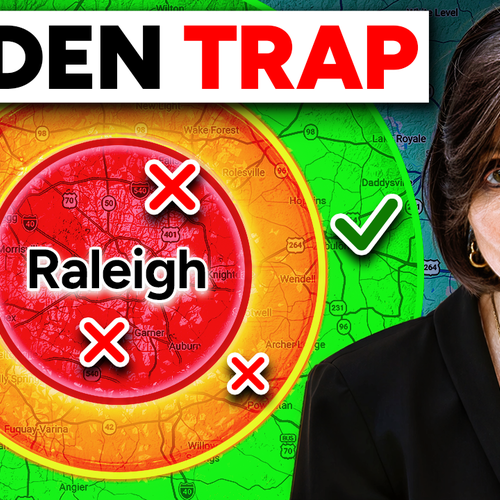


Most buyers moving to the Triangle start with Raleigh. The ones who do their homework take a serious look at Durham too — and they're usually glad they did. Triangle Market Intelligence — National narrative. Local reality.
Durham prices generally run below Raleigh's. But the range inside this city is wider than most buyers expect. Golf communities. Walkable historic districts. Wooded retreats. Active adult corridors. University neighborhoods with character homes and fast-moving markets.
Each part of Durham fits a different kind of lifestyle — and picking the right one makes a real difference in your day-to-day life. Here's what's actually driving it — and what it means for buyers getting serious about Durham right now.
Central Durham: Culture, Energy, and a Restaurant Scene That Earns Its Reputation
Durham has spent the last decade building a real identity. And nowhere is that more visible than in the center of the city. The food scene here operates on a different level. Farm-to-table, chef-driven, and built around local spots you won't find replicated across the region. When the goal is a genuinely top-notch meal anywhere in the Triangle, central Durham is where that search typically ends.
That same creative energy shows up in the neighborhoods. The Durham Performing Arts Center — DPAC — brings more than 200 shows a year to the heart of the city. Broadway productions, major concerts, comedy. It draws from across the Triangle.
The American Tobacco Campus, a former factory converted into a walkable historic district, anchors the area with restaurants, offices, and gathering spaces that have become part of how people experience downtown Durham. The Durham Bulls Athletic Park pulls fans throughout the season.
The warehouse district continues to grow, with new businesses arriving and momentum building. The neighborhoods closest to this energy — Trinity Park and Duke Park — sit just east of Duke's East Campus, tucked between downtown and the university. We'll cover both in detail shortly.
North Durham: Treyburn and Northwest Croasdaile — Golf, Calm, and a Tradeoff Worth Understanding
About five miles from central Durham's energy, the city feels like a completely different place. Treyburn is a 1,600-acre community built around a Tom Fazio-designed golf course, with access to multiple courses across the region through a larger golf network. The feel here is green, private, and deliberately removed from the pace of the Triangle.
Croasdaile sits right alongside it — another established golf community with its own 18-hole course and a very similar character. Both areas typically run from the high $500s to over a million. Commutes run approximately 20 minutes to downtown Durham, 25 minutes to Duke, and 30 minutes to Research Triangle Park.
The tradeoff is worth naming clearly before you fall in love with the setting. In these areas, the nearest grocery store is about 15 minutes away. That's not a knock — it's the truth. Some buyers genuinely want that kind of separation. The peace, the space, the feeling of being away from everything. But it's better to know that before you're living it than six months after you've closed.
The buyers who land here and stay tend to be established professionals and retirees who prioritize golf, calm surroundings, and the kind of address that reflects a particular lifestyle. If serenity is a non-negotiable, North Durham delivers it consistently.
East Durham: The Brier Creek Corridor and NC-55 — A Market That's Still Building Out
If the golf communities of North Durham are for buyers who want to step away from the pace of the Triangle, the Brier Creek corridor is for the ones who want to be right in the middle of it. Brier Creek sits directly on the Durham-Raleigh line. The draw is straightforward: you're close to RDU, close to RTP, and surrounded by newer infrastructure that makes daily life more efficient. And this area is still growing.
Durham Gateway at Brier Creek — a 310-acre mixed-use development — has already been approved, which means buyers getting in now are entering ahead of a more fully built-out corridor.
The larger story in this part of Durham right now is the concentration of active adult communities along the NC-55 corridor. Five 55-plus communities are established or under development here: Carolina Arbors by Del Webb (the largest, with 1,292 homes and a 37,000-square-foot amenity center), Creekside at Bethpage, Ovation at Sweetbrier by Mungo, Fendol Farms by Lennar, and The Courtyards at Oak Grove by Epcon.
These are fully amenity-active communities — fitness centers, pools, clubs, and social programming built into the neighborhood from day one. RDU is nearby, which matters meaningfully for buyers who travel regularly.
The buyer profile here splits in two directions. Active adult buyers who want built-in community without having to create it tend to move here quickly. Working professionals who want efficient access to RTP and the airport — without paying downtown prices — also find real value in this corridor. Practical, well-located, and still building out: a very different pitch from what's waiting on the west side of the city.
Duke East Campus Corridor: Trinity Park and Duke Park — Historic, Walkable, and Fast-Moving
There's a reason Duke employees keep ending up in the same few neighborhoods. It's not a coincidence. Trinity Park is a historic district tucked between downtown Durham and Duke's East Campus — on the city's central-west side, close to the university and within walking distance of the Ninth Street area. Craftsman bungalows, early colonials, and character homes from the early 1900s that have held their integrity.
You can walk to downtown restaurants and the Ninth Street area, which runs its own mix of local shops and cafes. Duke Park carries much of the same feel — established, full of character, close to the university, and the kind of streets where neighbors actually know each other.
Both neighborhoods draw heavily from Duke's employee base, plus buyers who know they do not want a subdivision. Prices reflect that demand. Most homes land somewhere between the high $500s and the high $800s — and they tend not to sit. When a well-kept home hits the market here, buyers who have been watching move.
For buyers who move to Durham specifically for history, walkability, and neighborhoods with real texture, the Duke East Campus corridor tends to deliver exactly what they came for. The community feel is genuine. The access to Duke and downtown is real. And for a lot of buyers, that combination makes the price straightforward to understand.
For a broader look at how Durham compares to the rest of the Triangle, see 5 Raleigh Suburbs Buyers Keep Comparing — And Why That's a Mistake.
Southwest Durham: Duke Forest and Hope Valley — Two of Durham's Most Sought-After Addresses
Two of Durham's most recognized addresses sit right next to each other in the southwest, and they pull in very different buyers for very different reasons.
Duke Forest
Duke Forest is surrounded by 7,000 acres of university-owned forest. You're not just near green space — you're living inside it. A strong mix of midcentury modern homes defines the area, and that alone draws a particular type of buyer. Median listing prices typically land in the mid to high $700s. The resident profile skews heavily toward Duke faculty, staff, and hospital employees. The feel is wooded, private, and close to campus. There isn't another part of Durham that replicates it.
Hope Valley
Hope Valley is one of those neighborhoods people recognize by name. It has the kind of established feel that comes with deep roots — strong demand and buyers who are still ready to compete when the right home appears. The historic section includes homes dating back to the 1920s and is listed on the National Register of Historic Places. Large estate lots.
Younger buyers coming in and putting serious money into real renovations, not cosmetic fixes. Hope Valley Country Club anchors the social side of the neighborhood. Median home values run in the low to mid $400s — a figure that surprises buyers when they hear the address.
Commutes are strong: approximately 15 minutes to downtown Durham and RTP, about 20 minutes to RDU. Hope Valley has held its value consistently, and the numbers reflect it. The buyer profile here is broad. Established buyers who want a strong address. Duke professionals who want more space and privacy. Younger buyers who see the upside and want to get in while there's still room. That breadth is a significant part of why this neighborhood stays as steady as it does.
South Durham: Woodcroft — Built Around How Life Actually Works
Where Hope Valley pulls in buyers who want history and a certain address, Woodcroft is about how daily life actually functions. This is a planned neighborhood built around outdoor living — and you feel it immediately. A four-mile walking trail loop runs through the community.
The Woodcroft Swim and Tennis Club provides a pool, tennis courts, and a fitness center that become part of residents' regular week. For buyers with children, that kind of infrastructure integrates into daily life faster than most people anticipate before they move.
Pricing is more approachable than the golf course communities to the north — typically landing in the high $300s to low $400s depending on the home. The location works well for RTP commuters. You're close to I-40, the drive is manageable, and the neighborhood still feels like a real community rather than a place that's simply convenient.
Outdoor-oriented buyers, RTP workers who want solid value without sacrificing quality of life, and buyers with children who want built-in community infrastructure make up the core of who lives here. And once people land in Woodcroft, they tend to stay — which tells you something meaningful about how a neighborhood actually functions.
Southeast Durham: Parkwood and Southpoint — The Case That Often Gets Overlooked
A lot of relocation guides barely mention southeast Durham. That's a real miss for buyers who want to stay close to RTP without paying west-side prices. Parkwood is one of North Carolina's earliest planned communities — started in the 1960s across 560 acres, with approximately 3,000 residents today. The mix is genuine: classic ranch homes from the 1960s and 70s alongside newer construction, and a neighborhood that has maintained a strong identity throughout.
A swim club, sports association, community events like Summerfest and a holiday festival that residents actually show up for. This is not a neighborhood that looks good on a map and feels hollow in real life. It works on a daily basis. Location is a core part of the appeal. Parkwood sits just a few miles from RTP, which means buyers working at Apple, IBM, Cisco, or Dell are as close to work as residential living allows in this market.
Compared to the Duke East Campus corridor neighborhoods covered above, you can get a genuine sense of community at a more approachable price point. The Streets at Southpoint anchors the retail side of the area, with more than 150 shops nearby. Neighborhoods like Chancellor's Ridge, Colvard Farms, Hills at Southpoint, and Grandale provide a mix of single-family homes, townhomes, and apartments. The American Tobacco Trail runs through this corridor.
You're approximately 10 to 15 minutes from RTP, RDU, and Chapel Hill. RTP workers who want a short commute, buyers looking for better value without ending up somewhere that lacks character, and buyers who want a neighborhood with genuine identity all find what they're looking for here. Southeast Durham checks a meaningful number of boxes at once — and it doesn't get the credit it deserves.
Bonus Areas: Chapel Hill and Hillsborough
Every area covered above sits inside Durham's city limits. These two don't — and that's exactly why buyers who have really done their research keep bringing them up.
Chapel Hill
Chapel Hill is about 12 miles from downtown Durham. With the University of North Carolina at Chapel Hill anchoring the community, it's a real option for buyers looking at this side of the Triangle. Downtown Chapel Hill has the walkable feel that draws people in — local shops, strong restaurants, and a school system that draws residents from across the region.
That draw comes with a price. Median prices here typically start in the high $500s to low $600s. Proximity to downtown pushes toward the higher end of that range. The drive to RTP can stretch to approximately 30 minutes depending on where you land. UNC employees, in particular, tend to feel strongly settled here — the community is tight, the walkability is genuine, and the college-town character is consistent.
Hillsborough
Hillsborough tends to catch people by surprise. A historic town about 14 miles from Durham, founded in 1754, with a population just under 10,000. The downtown historic district is listed on the National Register of Historic Places, with more than 100 historic homes and buildings. The small-town pace here is real, not manufactured.
Median prices run in the mid $400s — one of the more approachable options in the Triangle for buyers who want genuine charm and history. The commute to RTP typically runs under 30 minutes. The buyers who land in Hillsborough and stay tend to fall into two groups: buyers who love the feel of Chapel Hill but not the price, and remote workers who want somewhere calm and distinctly their own. Both tend to put down roots.
The Bottom Line
Durham rewards buyers who take the time to understand it. The range inside this city is genuine — from golf communities and wooded retreats in the north and southwest, to walkable historic neighborhoods and active urban corridors in the center and east, to practical, well-located suburban corridors in the south and southeast. What the areas covered here share is that each one fits a specific kind of buyer well — and fits other buyers poorly.
The gap between landing in the right part of Durham and the wrong one is not small. It shows up in commute times, in how daily life actually feels, in resale dynamics, and in whether the neighborhood delivers what drew you there in the first place.
For buyers coming from outside the Triangle, Durham often represents real value compared to comparable areas of Raleigh — particularly in historic neighborhoods, golf communities, and established suburban corridors. For buyers already in the market, Durham's range means there's likely a fit here that Raleigh's footprint doesn't replicate.
For a full picture of how the Triangle's cost structure works across county lines, The Real Cost of Living Outside Raleigh walks through exactly how those trade-offs stack up. The right Durham neighborhood doesn't just check the boxes on a spreadsheet. It fits how you actually live — your commute, your routine, your priorities, and your plans for the long term. That's the analysis worth doing before you start making offers.
TMI with Marti exists to help buyers and sellers make clearer decisions by understanding how the market is actually behaving. Get the next TMI update delivered to your inbox — subscribe here.
Frequently Asked Questions
Check out this article next