

Every major outlet has run the headline by now. North Carolina number one for migration. Raleigh booming. Growth beating Texas, beating Florida, beating everyone.
Triangle Market Intelligence — National narrative. Local reality.
What none of those headlines tell you is where people are actually going when they get here — which neighborhoods, which price points, which trade-offs — and whether the growth story holds up when you look past the state-level numbers at what's actually happening on the ground in Wake County right now.
That's what this is for.
The Numbers Are Real — And Worth Understanding Clearly
North Carolina added roughly 146,000 residents between July 2024 and July 2025 — the third-largest total population gain in the country. For domestic migration specifically, people actively choosing to leave one state and move here, North Carolina ranked first. Ahead of Texas. Ahead of Florida. Ahead of every other state.
The Raleigh metro area is now at approximately 1.66 million people. Wake County is growing by around 66 people every day. Those aren't projections — that's what the current data shows.
Growth has returned to a more normalized pace after the COVID-era acceleration, and that's actually a healthier picture for buyers than what we saw in 2021 and 2022. The frantic market of the unicorn years — inventory below one month of supply, bidding wars everywhere, prices moving faster than anyone could track — gave way to something more stable. More inventory. More time to make a considered decision. More room to negotiate than buyers have had in years.
The growth didn't stop. The conditions for buyers improved. Those are two different things, and understanding the difference matters before you make a move.
Where the New Residents Are Coming From
The pattern has been consistent for decades. The Northeast — and specifically the greater New York and New Jersey area — has always been the largest source of inbound residents. The reason is straightforward: taxes. North Carolina's flat income tax rate sits at 3.99%, and that's a meaningful drop from what most northeastern households are paying. Milder winters are a factor too, though anyone who's been here in July knows we made our own trade-off there.
California increased significantly during and after COVID, driven largely by the price differential. What a Bay Area or Los Angeles buyer can get here for the same money is a different category of home entirely.
Florida has become a growing source of inbound migration as well. There's a local term for a specific subset of these buyers — half-backs. Many originally relocated from the Northeast down to Florida, found the heat and the rising insurance costs harder to manage than expected, and moved halfway back up the coast. The Triangle has become a natural landing point.
Virginia, South Carolina, Texas, and New Jersey round out the domestic picture. And roughly 31% of North Carolina's population growth since 2020 has come from international migration, though that share has shifted with recent changes in federal immigration policy.
Raleigh ranked second only to Charlotte for total net migration gains within North Carolina last year — and when you look at arrivals against departures, the net positive is substantial.
Why People Are Choosing Raleigh
I've watched this city grow for a long time, and what draws people here isn't one thing — it's a combination that's genuinely hard to find at this price point.
The job market is the primary driver for most working-age buyers. Research Triangle Park is the largest research park in the United States. IBM, Red Hat, Cisco, SAS, Lenovo, Epic Games — the anchor employers here have been here for decades. Apple has committed to a billion-dollar campus at RTP with a target of at least 2,700 jobs in AI and machine learning. Google has established significant operations in the Triangle. Biogen announced a $2 billion manufacturing expansion at RTP in 2025. The unemployment rate here consistently runs below the national average, and the range of industries is wide enough that a single sector downturn doesn't move the whole market.
Cost of living is the other major factor, especially for buyers coming from the coasts. The overall cost of living runs roughly 4% below the national average, with utilities coming in around 12% more affordable and housing around 10% below national benchmarks. For retirees specifically, the tax structure here is worth understanding: Social Security is fully exempt from state income tax, there's no inheritance tax, and Wake County's effective property tax rate runs around 0.68%. You feel that difference every month.
And then there's the life itself. Four real seasons. Over 180 miles of greenways across the metro. More than 10,000 acres of parkland. Duke, WakeMed, and UNC Rex anchor a healthcare infrastructure that competes with any major metro in the country. In late 2025, the Raleigh area received its first-ever Michelin Guide recognition as part of the inaugural Michelin Guide American South — 14 Raleigh-area restaurants included. The food scene here has genuinely grown up, and that matters to a lot of the buyers we work with. Raleigh was also named the number-one best U.S. city for job opportunities and earning potential by the New York Post in 2025.
We love this city. We've watched it build into something real over decades. That's not a marketing position — it's just true.
Where Buyers Are Actually Landing
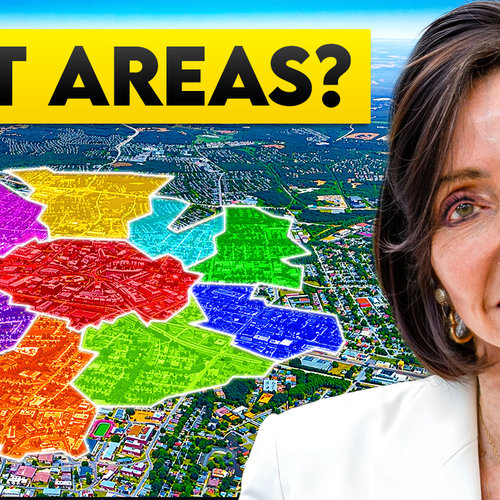
Where you end up in the Raleigh metro should match the life you're actually planning to live. These areas aren't ranked — they serve different buyers for different reasons.
Downtown Raleigh and Glenwood South
For younger professionals and buyers who want walkability and energy, downtown Raleigh is the natural starting point. Nearly 4,000 new residential units have been delivered downtown since 2020 — mostly townhomes and condos — with more in the pipeline. Prices typically run in the mid $400s. Glenwood South sits adjacent, a former industrial corridor now anchored by restaurants, galleries, and bars. Different texture, same energy.
North Hills
North Hills has built a genuine midtown identity — city amenities without downtown congestion, and a straightforward drive to RTP. Prices start in the high $500s and move quickly into the millions depending on the specific address.
Cary
For families — and particularly for buyers coming from the Northeast — Cary is usually the first serious look. It ranked number five nationally and number one in North Carolina on U.S. News and World Report's 2025-2026 Best Places to Live list. Homes typically start in the high $500s. The schools, the parks, the infrastructure — it earns the reputation it carries.
North Raleigh and Brier Creek
North Raleigh works well for families who want nature preserves and good metro access without being in the middle of everything. Brier Creek is worth a hard look for anyone whose work involves regular air travel — the proximity to RDU is a genuine daily advantage.
Five Points, Mordecai, and Hayes Barton
For buyers who specifically want older homes with character, mature trees, and walkability close to downtown, this inner-ring cluster delivers. Restored homes, established streets, close to everything. These neighborhoods attract buyers who know what they want and have usually been watching the market for a while before they move.
The Outer Ring
Fuquay-Varina, Wake Forest, Garner, Wendell, Knightdale, Zebulon, and Clayton all sit 20 to 30 minutes out and offer real value for buyers who want more space or a quieter pace. Fuquay-Varina homes trend in the mid $400s. Wake Forest and South Raleigh have entry points in the same range. Wake County gives Garner a Niche A rating and Clayton an A-minus — you're giving up less than the distance might suggest.
Active Adult Communities
Around 52% of Wake County's population growth since 2020 came from residents 55 and older. The market has responded with a significant inventory of amenity-active communities built for that buyer — fitness centers, pools, social programming, and maintenance structures that make daily life genuinely easier. The tax setup here makes this one of the stronger retirement markets in the country, and the healthcare infrastructure backs that up.
For a detailed look at how the trade-offs between different parts of the metro actually stack up, 5 Raleigh Suburbs Buyers Keep Comparing — And Why That's a Mistake walks through the specifics.
Is Anyone Leaving?
Yes — around 28,646 people left the Raleigh area last year, primarily to South Carolina, Florida, and Virginia. The reasons are what you'd expect from a maturing city: retirement relocations to the coast or the mountains, job transfers, and some movement from urban cores out to the suburbs as the city has grown denser. That's a normal pattern. The net migration picture remains strongly positive.
Will the Growth Continue?
The structural case is solid. North Carolina is on track to become the seventh most populous state in the country by the early 2030s, with over 90% of that growth coming from people moving here rather than from births. The state population sits at 11.2 million as of mid-2025 and continues to climb.
The investments anchoring that growth are specific and committed. Apple's billion-dollar RTP campus targets at least 2,700 jobs in AI and machine learning. Biogen's $2 billion manufacturing expansion at RTP is underway. RDU served approximately 15.5 million passengers in 2025, hit a record 80 nonstop destinations, and has major infrastructure projects accelerating into 2026.
On the housing side, inventory is up meaningfully year-over-year. Prices are stabilizing. Buyers have more leverage than at any point since 2020. The underlying drivers of growth — jobs, cost structure, quality of life — remain intact. What changed is the market conditions for buyers. That's a good thing.
For a closer look at how costs compare across different parts of the Triangle, The Real Cost of Living Outside Raleigh breaks down where those trade-offs actually land.
The Bottom Line
The headline numbers are real. North Carolina led the country in domestic migration last year, and Raleigh is at the center of that growth. But the number that matters most for a buyer isn't how many people moved here — it's whether the specific part of the metro you're considering actually fits the life you're planning to live.
The right neighborhood shows up in your commute, in how your daily routine feels, in what your resale picture looks like five or ten years out. That analysis is worth doing carefully. The market right now gives you the time and the inventory to do it well.
TMI with Marti exists to help buyers and sellers make clearer decisions by understanding how the market is actually behaving. Get the next TMI update delivered to your inbox — subscribe here
Frequently Asked Questions
Contact Marti Hampton Real Estate:
Phone: (919) 601-7710
Web: MartiHampton.com
Check out this article next