


The letter doesn't come right away.
It comes two years later — after the deal closed cleanly, after the buyer moved in, after you'd already moved on.
It comes from an attorney.
It says you misrepresented a fact on your Residential Property Disclosure. And the buyer you sold to is now suing you for thousands of dollars.
I've seen it happen. And in most cases, it was completely preventable.
That's what I want to talk about today — not the deal that falls through at inspection, not the buyer who walks away because something scared them. Those are disappointing. But they're not the worst thing that can happen when you sell your home in North Carolina.
The worst thing closes quietly and surfaces later.
Blind Spot Series — What you don't know can cost you.
Why Disclosure Problems Happen to Honest Sellers
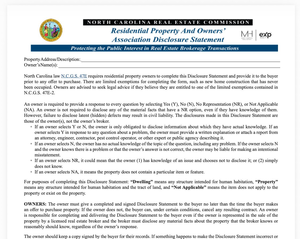
The NC Residential Property Disclosure Statement (REC 4.22) — required by law for all home sales in North Carolina.
Most disclosure problems aren't the result of someone trying to hide something.
They happen because a seller sat down with a form they'd never seen before — with an agent who didn't slow down long enough to explain what it actually meant — and answered questions based on what they thought was being asked.
That gap between intent and interpretation is where legal exposure lives.
Many agents, particularly those working a handful of transactions a year or treating real estate as a side project, simply don't stress the importance of this document. They hand it over. They move on.
Sellers fill it out without fully understanding that every answer carries legal meaning.
That's the real risk. Not dishonesty. Unawareness.
What the Residential Property Disclosure Actually Is
The Residential Property Disclosure is required by law when you sell a home in North Carolina. It's not optional. It's not a formality.
It is a legal document.
Every answer you provide — yes, no, no representation — is a statement of fact that follows the transaction. If a buyer discovers something after closing that contradicts what you disclosed, that document becomes evidence.
Understanding "No Representation"
One of the most important options on this form is one sellers consistently misread: No Representation.
No Representation means: I don't know.
That is a completely honest and legally sound answer. It's common in inherited homes, in properties that were rented out for years, in situations where you genuinely can't verify something without an inspection.
"I don't know" is far safer than a guess.
But here's the question I always ask sellers who are considering checking No Representation across multiple sections: if you were buying this home, and most of the disclosure said "I don't know" — would that make you more confident, or less?
That's the tension sellers need to sit with. Which is exactly why I recommend getting familiar with this form before your home ever goes on the market.
Request a copy of the NC Residential Property Disclosure here.The Sections That Catch Sellers Off Guard
The form covers a lot of ground. These are the areas where I see sellers run into trouble most often.
Structure, Roof, and Foundation
Buyers and inspectors look at ceilings, attics, crawl spaces, and the foundation for signs of moisture, cracking, or settling.
Before your listing agent arrives, know your roof's age, your siding type, and whether any repairs have been made. If you have warranty information or receipts, have them ready.
If you don't know the roof age, we can often get records directly from the roofing company. We don't disclose an age we can't verify.
HVAC Systems and Water Heaters
Verify the manufactured date directly from the unit — don't rely on memory. Buyers and inspectors will check it.
If your system uses R-22 refrigerant, which is being phased out, that's a conversation to have before a buyer is under contract — not after. Parts are scarce and repairs are expensive.
A home warranty can help buyers feel more comfortable with that risk.
Polybutylene Piping — The One Agents Miss Most Often
If your home was built between 1978 and 1995, there's a specific question on the form about polybutylene piping.
This material was widely used during that period and degrades over time. Here's the rule: even if you believe the house has been fully replumbed, the disclosure must still reflect that polybutylene was once present. We cannot see inside the walls.
So we don't check No on this question. We check No Representation.
This is a manageable disclosure issue when handled correctly. It becomes a serious problem when it's ignored.
Electrical Panels
In older homes, inspectors specifically look for Federal Pacific and Zinsco panels — both have been recalled.
If your home has one, you want to know that before the buyer does.
Flood Status
A seller who has never paid flood insurance doesn't automatically mean the home isn't in a flood zone.
It may mean the home is owned outright with no lender requiring coverage — or the flood maps have changed since you bought.
Verify current flood status through FEMA and North Carolina's flood mapping tools. If flood insurance isn't required, have documentation that supports it. If you can't confirm it, don't check No. Check No Representation.
Septic Systems
The number of bedrooms a home can be listed with must match what the septic permit supports.
This matters more than most sellers realize. Pull the permit from the county before you list. If the information isn't available online, we contact the county directly and document the call.
HOA Litigation
If the homeowners association has a pending lawsuit, it will surface during the attorney's title search.
When it does, lenders may refuse to fund the loan.
If you're aware of a pending assessment — or even an assessment that has been discussed — disclose it. Trying to conceal it doesn't protect the seller. It just moves the discovery to the worst possible moment.
Nuisances
Train tracks. Airport flight paths. A neighbor's dog that never stops barking.
Anything that materially affects the enjoyment of the property is a disclosable fact. This isn't about scaring buyers away — it's about giving them the information they need to make a clear decision.
Fences and Encroachments
A fence installed without a survey may not be where anyone thinks it is.
I've seen fences that had to be moved inches to close a deal. If you're not certain the fence is within your property line, say so.
Unpermitted Additions
If any space was added without a permit, the permit portal will be checked.
Unpermitted additions can affect the appraisal, insurance coverage, and the sizing of your HVAC system. Know what's permitted before the buyer finds out.
Radon
If the home has never been tested, check No Representation — not No.
If you have a radon mitigation system, the maintenance record is a significant asset to have ready.
The Most Common Mistake Sellers Make
There's a section on this form with four answer options: Yes, No, No Representation, and N/A.
Most sellers think they're answering whether a particular item exists in the home.
That's not the question.
The question is whether there is a defect.
Yes, No, No Representation, and N/A are all answers about condition — not existence. That distinction matters more than most people understand, and it's one of the most consistent errors I see sellers make when they fill out this form without guidance.
What to Do Before Your Home Goes on the Market
When sellers call me asking how to prepare for a listing, they usually want to talk about updates or landscaping.
My first answer is always the same: hire a home inspector, and get familiar with this form.
Why a Pre-Listing Inspection Changes Everything
A pre-listing inspection is one of the most strategic things a seller can do.
If you don't know the answers to questions on the Residential Property Disclosure, an inspector is one of the best resources you have to get those answers before a buyer ever walks through your door.
Pull your permits. Check your flood map status. Verify your system dates. Know what's on this form before it's in front of someone who's about to make an offer.
A smooth transaction doesn't happen by accident. It happens when the right questions are asked at the beginning — not discovered during due diligence.
For a deeper look at how MHRE approaches the pre-market process, see Your Home Sold. Fast. And For the Best Price.
What Buyers Need to Know About This Form
If you're a buyer reading this, the Residential Property Disclosure is not a warranty.
When a seller checks No, it means they have no knowledge of a defect. It does not mean the defect doesn't exist. That's exactly why you hire a home inspector.
If anything on the disclosure raises a question, ask about it. Use your due diligence period.
A pre-offer inspection gives you the information you need before you're under contract. If something on the disclosure concerns you, that's not a reason to walk away — it's a reason to ask the right questions with the right people before you sign.
What Great Agents Do Differently
A great listing agent walks into your home already having pulled GIS records and knowing when it was built.
They review the online information with you and note any inconsistencies before the disclosure is ever touched. They don't hand you the form and move on. They sit with you and explain what each question is actually asking — including the ones that agents miss, like the polybutylene rule.
When an issue surfaces, it doesn't become a crisis. It becomes part of the strategy.
It gets addressed, documented, or factored into how the home goes to market — before a buyer walks through the door.
That's the difference between a transaction that closes cleanly and one that shows up in a letter from an attorney two years later.
Clarity before strategy. That's what protects sellers.
Frequently Asked Questions
What is the Residential Property Disclosure in North Carolina?
The Residential Property Disclosure is a legally required document sellers must complete when selling a home in North Carolina. It asks sellers to disclose known defects across major systems and structural elements of the property. Every answer — yes, no, or no representation — carries legal meaning. If a buyer discovers after closing that something was misrepresented on this form, it can result in legal action against the seller.
What does "No Representation" mean on the NC property disclosure?
No Representation means the seller genuinely does not know whether a defect exists. It is a legally honest answer and is often appropriate for inherited properties, homes that were previously rented out, or situations where the seller cannot verify something without a professional inspection. It is preferable to guessing — checking No when you aren't certain creates legal exposure.
Does a seller have to disclose a previous flood in North Carolina?
Yes. Flood history, flood zone status, and flood insurance requirements are material facts in North Carolina. Sellers should verify current flood status through FEMA and state flood mapping tools. If flood insurance is not required, documentation supporting that should be available. If current flood status cannot be confirmed, No Representation is the appropriate answer.
What happens if a home seller misrepresents the property disclosure?
If a buyer discovers after closing that information on the Residential Property Disclosure was inaccurate — even if the misrepresentation was unintentional — the seller may face legal action. The disclosure document becomes evidence in any post-closing dispute. This is why accuracy, transparency, and using No Representation when uncertain is critical.
Should I get a pre-listing inspection before selling my home in North Carolina?
Yes — particularly if you're unsure how to answer questions on the Residential Property Disclosure. A pre-listing inspection helps sellers understand the condition of their home before a buyer does, surfaces issues that can be addressed proactively, and provides the documentation needed to answer the disclosure accurately. It's one of the most effective ways to reduce legal exposure and streamline negotiations.
What is polybutylene piping and why does it matter on the disclosure?
Polybutylene was a common plumbing material used in homes built between approximately 1978 and 1995. It degrades over time and has been associated with pipe failures. Even if you believe your home has been fully replumbed, North Carolina disclosure rules require that you note polybutylene was once present — because what's inside the walls cannot be verified visually. Checking No on this question when the answer is uncertain creates legal exposure. No Representation is the correct answer in most cases involving homes built during that period.
Check out this article next