


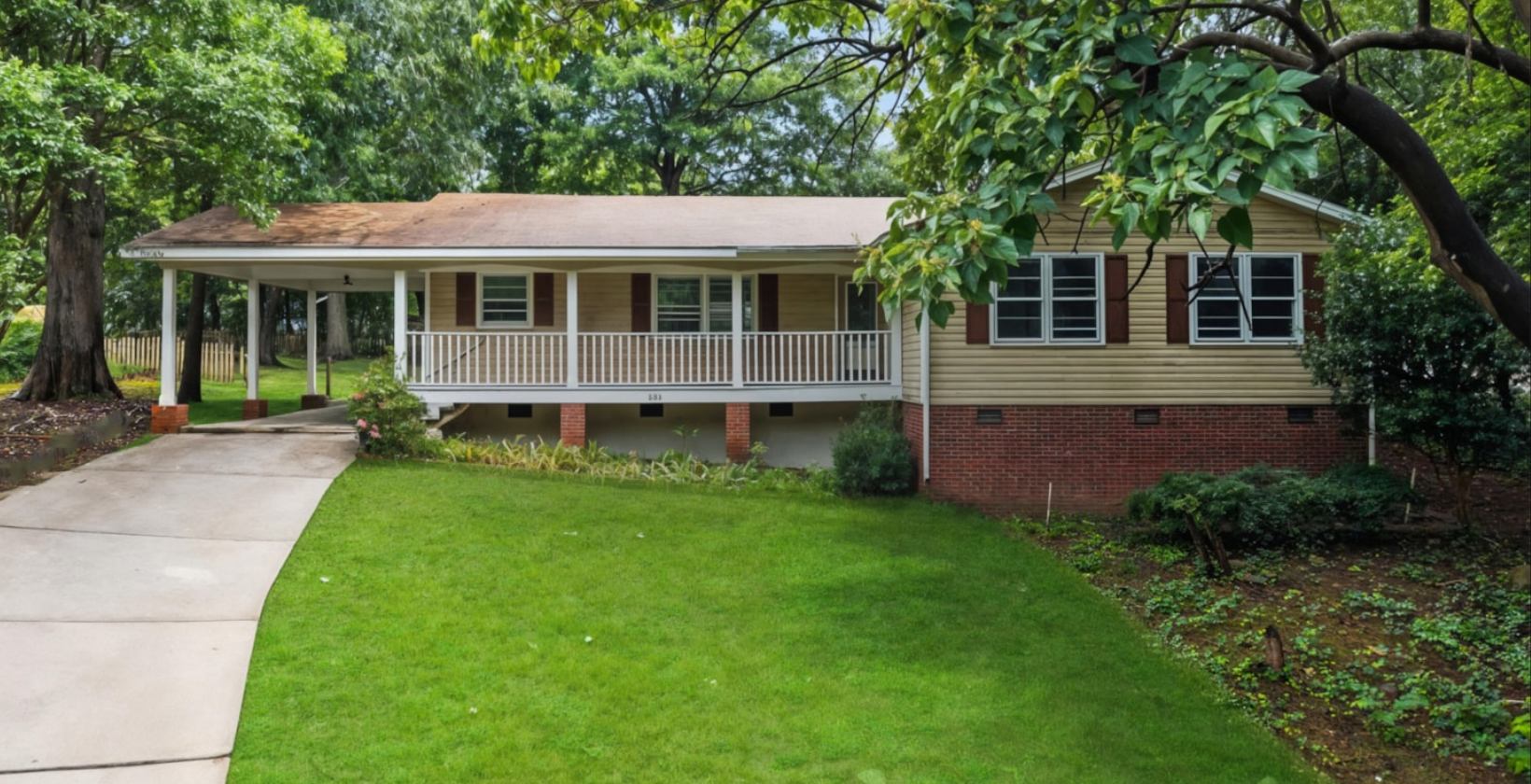
Most buyers skip this home in under 30 seconds—walking away from a place that would have worked well to live in and held its position as a smart ownership choice over time.
Not because it’s overpriced or the location is wrong.
They move on because one visible detail signals “more work.”
It’s a familiar behavior: quick dismissal and an opportunity overlooked before the fundamentals are ever assessed.
But the underlying structure, location, and ownership profile tell a different story than the first reaction suggests.
So let’s take a closer look.
The Role of a Home Like This
131 Creech Road sits on nearly half an acre in Wake County, carries no HOA restrictions, includes meaningful functional updates, and holds a location that offers daily flexibility. The trade-offs here are deliberate: cosmetic preferences can be changed gradually; land, privacy, and positioning cannot.
For buyers thinking strategically rather than aesthetically, the value becomes clearer the longer the home is evaluated.
Start With the Structure
At this price point, structure matters more than finish. Here, the single-level ranch layout prioritizes motion through the home—no offsets, no transitional surprises, no architectural tricks meant to create the illusion of scale. It’s a plan designed to be lived with, not just looked at.
Rooms sit where you expect them to. Circulation is intuitive. You don’t have to solve the house before using it.
The hardwood flooring and updated systems reinforce that idea. They aren’t decorative flourishes; they’re durability decisions. And because the essentials are already working, cosmetic choices can be delayed, phased, or reconsidered without affecting day-to-day function.
Where Buyers Hesitate
The hesitation rarely begins with anything fundamental. Instead, it shows up in places like the kitchen—often at the backsplash. A darker tone reads as “project,” and once a buyer labels something a project, the scale of that project tends to inflate in their mind.
Some buyers zoom in for another look. Others reopen their search tabs. Many simply shift to the next address in the feed.
This pattern isn’t just about expense. It’s also about mental bandwidth. Buyers avoid a decision that feels open-ended, even if the work itself is contained and finite. That’s how strong, straightforward homes lose early traction: the small, adjustable details overshadow the permanent advantages.
Location as Function
This part of Garner operates quietly but efficiently. Downtown Garner is minutes away. White Oak Shopping Center sits just beyond it, covering most daily needs—groceries, entertainment, practical errands. Raleigh remains close enough to reach without being a constant backdrop.
The result is a location that flexes. Commutes can shift. Routines can change. The home supports multiple patterns of daily life rather than prescribing one. Prestige isn’t the point here; usability is.
If you're comparing multiple locations within Wake County, our Triangle Market Intelligence updates offer broader context on commuting patterns, neighborhood dynamics, and practical trade-offs.
What’s Already Been Addressed
Several of the high-impact areas have already been handled. The renovated bathroom removes one of the most disruptive and expensive interior updates from the equation. Hardwood floors simplify maintenance and wear gracefully. Kitchen systems are in place and functional, which reduces the likelihood of immediate capital decisions.
These are stability updates—measures that lower uncertainty and help a new owner step into the home without a triage list.
Who This Home Tends to Work Well For
This home tends to resonate with buyers who:
- Want land and privacy without HOA oversight
- Prioritize ownership fundamentals over turnkey cosmetics
- Prefer proximity to Raleigh and Garner without the density
- Plan to personalize gradually rather than all at once
It tends to be less well matched for:
- Buyers wanting fully updated interiors at this price
- Those who prefer HOA-managed environments
- Buyers seeking larger footprints or expansion flexibility
Why This Example Holds Up
131 Creech Road reflects a pattern seen across competitive markets: cosmetic discomfort often speaks louder than structural or locational strength. And when that happens, buyers move past homes that would have served them well simply because the adjustable feels bigger than the permanent.
Separating those categories—what can be changed versus what defines the home—is the foundation of sound ownership decisions. The specifics will differ from property to property; the decision pattern is consistent.
Curious about the current status of this home or how a property like this might fit your situation?
You can reach our team here: Contact Marti Hampton Real Estate.
Check out this article next